
US begins blockade of Iran's ports, Tehran threatens retaliation
April 15, 2026 · By Olamide5678
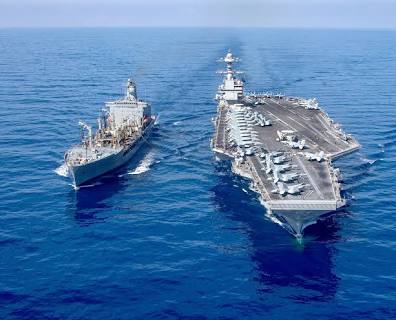
The U.S. naval blockade of Iranian ports has plunged the Middle East into its most volatile state in decades, effectively severing Iran’s primary maritime trade arteries. By deploying carrier strike groups to the Persian Gulf and the Gulf of Oman, Washington has signaled a transition from economic "maximum pressure" to active military enforcement. The blockade aims to halt not only oil exports but also the flow of industrial goods, further strangling an economy already battered by years of sanctions. This maneuver is viewed by the international community as a high-stakes gamble intended to force Tehran back to the negotiating table under immense duress.
In response, Tehran’s leadership has issued a series of increasingly bellicose warnings, characterizing the blockade as an "act of war." High-ranking officials within the Islamic Revolutionary Guard Corps (IRGC) have threatened to retaliate by closing the Strait of Hormuz—the world’s most critical oil chokepoint. Iranian military commanders have suggested that if their ships cannot pass, no ships will pass, hinting at the use of sea mines, drone swarms, and ballistic missiles to disrupt global energy markets. The rhetoric from Tehran suggests that they view this as an existential threat that warrants a total military response.
The global economic implications were felt almost immediately, with Brent crude prices spiking as traders braced for a prolonged conflict. Energy analysts warn that any sustained disruption in the region could trigger a global recession, as the Persian Gulf facilitates roughly one-fifth of the world’s daily oil consumption. Shipping insurance premiums for tankers in the region have skyrocketed, leading some commercial fleets to reroute entirely. This economic ripple effect is putting immense pressure on world leaders to find a diplomatic off-ramp before the localized blockade evolves into a global financial crisis.
Geopolitically, the move has created a significant rift between the United States and its traditional allies. While Washington expected a unified front, several NATO members and European powers have expressed deep unease, fearing the blockade will lead to an uncontrollable regional war. These nations have urged restraint, emphasizing that humanitarian aid and civilian goods must be allowed through to prevent a massive crisis for the Iranian population. This lack of international consensus has emboldened critics who argue that the U.S. is acting unilaterally, potentially isolating itself from its closest security partners.
Within Iran, the blockade has triggered a paradoxical domestic reaction. While the economic hardship is intensifying, the perceived foreign aggression has allowed the hardline elements of the government to rally nationalist sentiment. State media has focused heavily on "foreign bullying," attempting to frame the struggle as a defense of national sovereignty rather than a failure of domestic policy. However, as food and medicine shortages begin to loom due to the logistical paralysis at the ports, the internal stability of the country remains a massive question mark, with the potential for either extreme suppression or renewed civil unrest.
The United States has countered criticism by asserting that the blockade is a necessary measure to prevent the proliferation of regional instability and to curb Tehran's nuclear ambitions. White House officials argue that traditional sanctions have reached their limit and that physical interdiction is the only way to ensure compliance. They have also issued stern warnings that any "fast-attack" vessels or asymmetric threats from Iran will be met with overwhelming force. This "zero-tolerance" policy in the waters surrounding Iran has created a hair-trigger environment where a single tactical error could spark a massive kinetic exchange.
As the standoff enters a critical phase, the international community is looking toward emergency sessions at the United Nations to mediate the crisis. Secret "back-channel" talks in neutral locations like Islamabad suggest that neither side is entirely closed to dialogue, yet the public posturing remains fiercely aggressive. The coming days will determine if this blockade is a prelude to a comprehensive diplomatic breakthrough or the opening chapter of a devastating new conflict in the Middle East. For now, the world watches the Persian Gulf with bated breath, as the line between pressure and war grows thinner by the hour.
Related Articles


Comments
Pufflinguard
Hmmm